

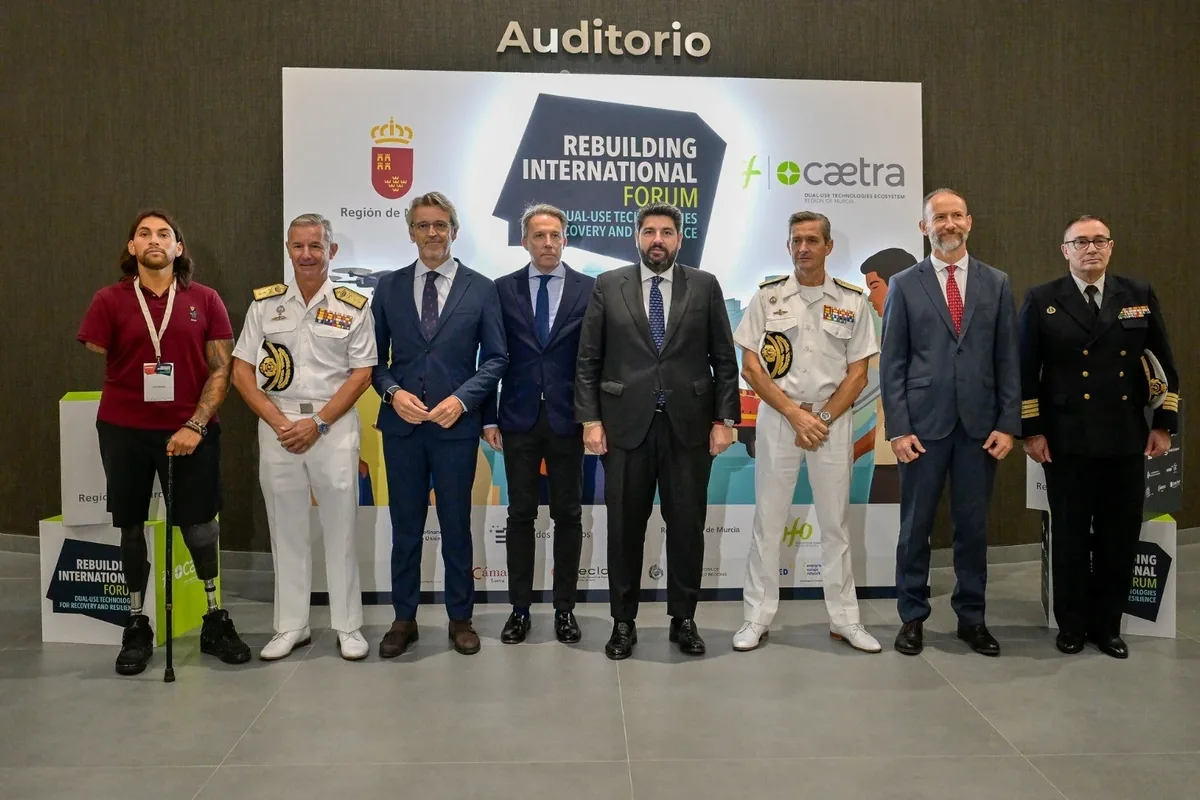
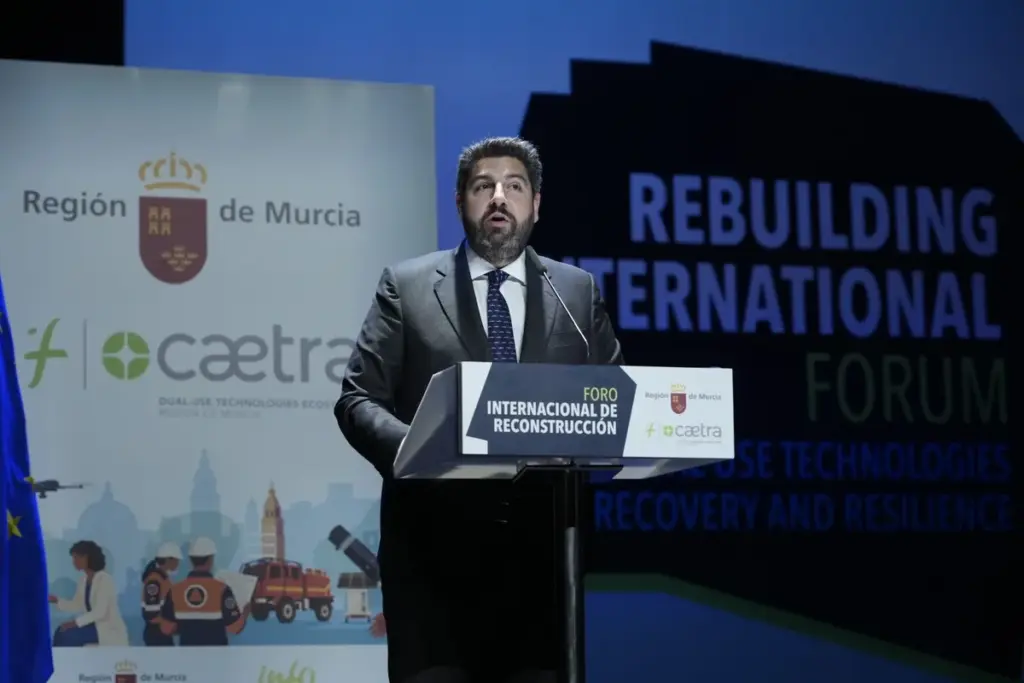
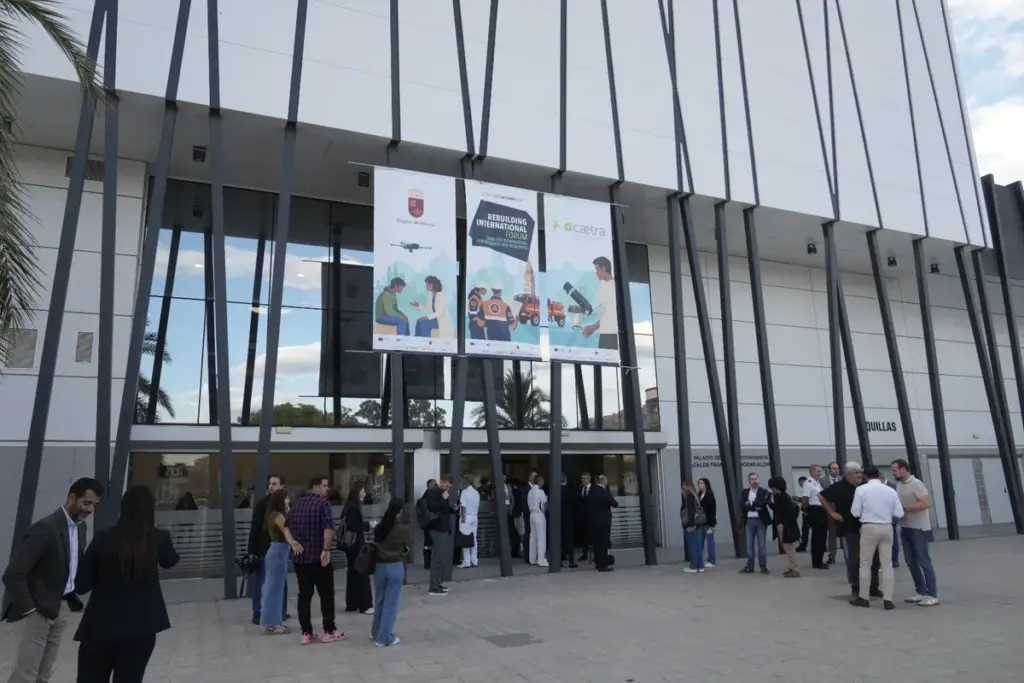
The President of the Region of Murcia, Fernando López Miras, opened the ‘Rebuilding International Forum CAETRA: Dual-use technologies to rebuild the future’ in Lorca, an event that brings together representatives of NATO, the European Parliament and Ukraine, international experts and 30 technology companies from the Region.
The forum, part of the Regional Government’s CAETRA programme, explores how technologies with both civilian and military applications can help rebuild territories hit by natural disasters or armed conflicts.
At the opening, López Miras said the Region of Murcia “wants to be a benchmark in dual-use technologies” and in Europe’s response “to the challenges of defence, security and reconstruction”. Through this event, he added, the Region, and Lorca in particular, puts its experience at Europe’s service, taking “the definitive step in deploying CAETRA’s reconstruction pillar”.
Lessons from Lorca, fifteen years on
The President highlighted the significance of holding the forum in Lorca fifteen years after the 2011 earthquakes: “Reconstruction continued long after the rubble had been cleared. We learned that then and we have not forgotten it.” That experience, he said, allows the Region to contribute “the knowledge of those who have already been through it”.
The programme includes round tables on the lessons learned from the Lorca earthquakes, the La Palma volcanic eruption, the Valencia floods (DANA) and the wildfires in Castilla y León, alongside emergency experiences from France, Italy and Portugal. Speakers include Captain (Navy) Ignacio Nieto, posted to NATO’s Allied Joint Force Command in Brunssum (Netherlands), and US Army veteran José Martínez, who shares his recovery journey after being seriously wounded in Afghanistan.
An exhibition area showcases 30 companies from the Region presenting technology solutions for emergency management and reconstruction. The forum closes with a visit to heritage sites in Lorca restored after the 2011 earthquakes.

Leading regional companies
The forum is structured around three main areas: rebuilding infrastructure and preparing territories for emergencies; the physical and psychological recovery of those affected; and the use of dual-use technologies for healthcare in crisis situations. Talks and expert panels address solutions to anticipate risks, assess damage, coordinate emergency services and keep caring for people when usual infrastructure stops working.
On infrastructure and emergency preparedness, López Miras highlighted regional companies such as EcoHidro, whose solar-powered portable water purification plants have been deployed in emergencies in Haiti and Mexico, and Lorca-based Civilio, whose technology platform was born from the experience of the 2011 earthquakes. Civilio’s tool was used in the municipalities affected by the Valencia floods to coordinate teams of architects, record building damage and provide information to local councils.
People’s recovery also takes centre stage, with special attention to mental health and the treatment of the after-effects of disasters and armed conflicts. In this context, López Miras gave a special welcome to the Ukrainian delegation, which includes professionals specialised in treating war trauma.
In the healthcare applications of dual-use technologies, the focus was on solutions that keep medical care running during emergencies. Regional companies taking part include Limbium, specialised in advanced custom prosthetics; Aerospace Design Technology, based in Molina de Segura; and Cartagena-based Biyectiva, which develops AI solutions. López Miras noted that many of these innovations were born in the defence sector and now find applications in civilian healthcare.
CAETRA, recognised by the European Committee of the Regions
The forum is part of the activities of CAETRA, a Regional Government programme recently recognised by the European Committee of the Regions as an example of regional development of dual-use technologies for defence and security. The recognition appears in the 2026 Annual Report on the State of Regions and Cities, published last week, which highlights the Region of Murcia’s capacity to drive technological innovation in defence and cooperation between public administration and business. Around 140 regional companies are currently linked to CAETRA.